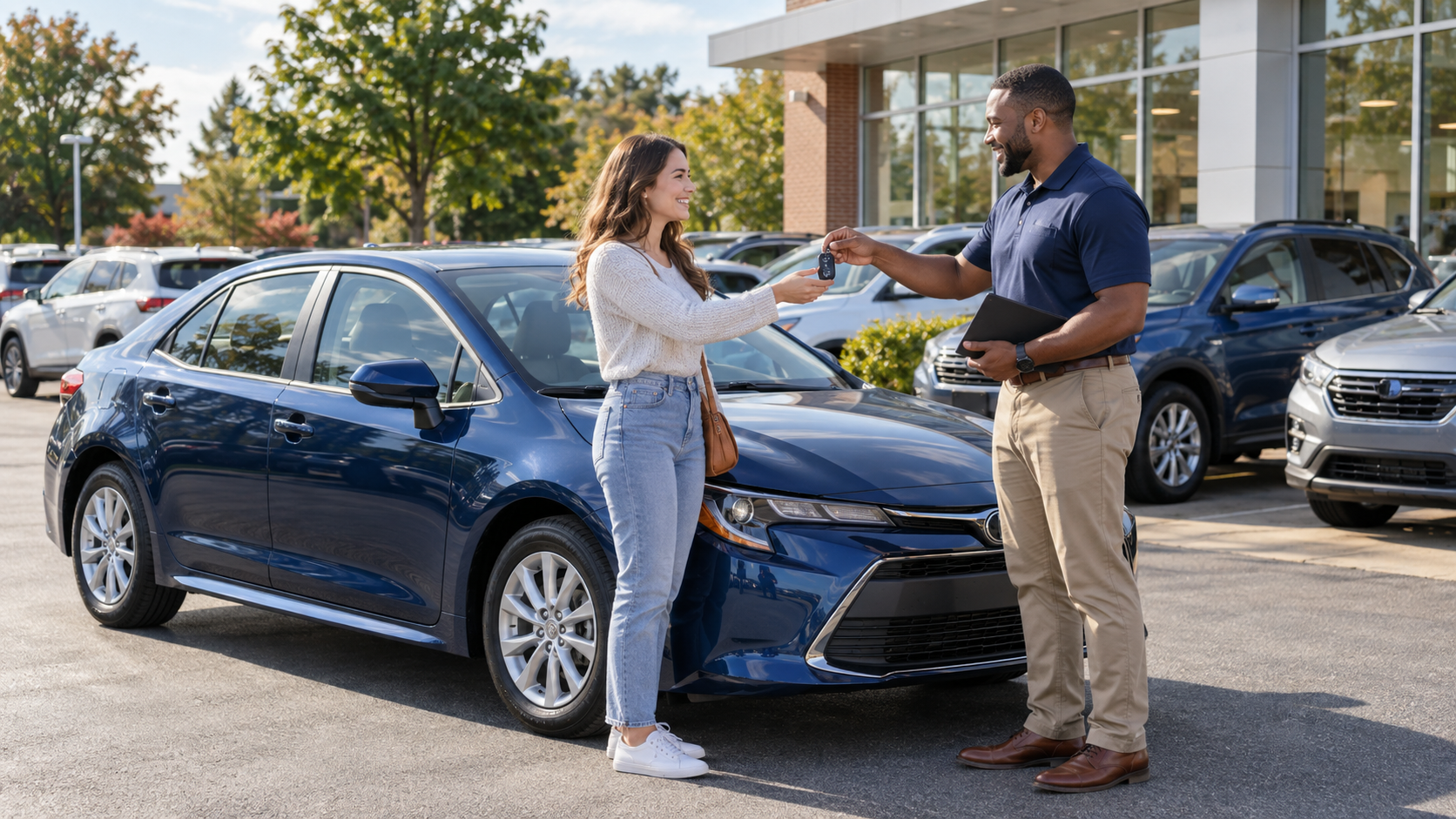
Buying Your First Car in Fredericksburg, VA: The Complete First-Time Buyer’s Guide
Buying your first car is exciting.
It can also be confusing.
How much car can you afford? Do you need credit history? Should you get financing before choosing a vehicle? How much should you put down? What happens if you have never had a loan before?
If you're buying your first vehicle in Fredericksburg, VA, the process becomes much easier when you handle those questions in the right order.
The best first step is usually to understand your budget and financing options before choosing a specific car. Then you can shop for vehicles that fit both your transportation needs and your actual financial situation.
This guide walks through the process from your first budget decision to the day you take your vehicle home.
Step 1: Decide What You Can Really Afford
Your first-car budget should include more than the monthly loan payment.
Think about the complete cost of having the vehicle:
Vehicle payment
Auto insurance
Fuel or charging
Routine maintenance
Tires
Registration
Personal property taxes where applicable
Parking or tolls
Unexpected repairs
A $350 car payment does not mean the vehicle costs only $350 per month to own.
That is why the Consumer Financial Protection Bureau recommends looking at your overall monthly spending before deciding how much you can comfortably borrow. Vehicle price, taxes, fees, down payment, interest rate, and loan length can all affect your actual cost.
A better first-car question
Don't begin with:
“How much can I get approved for?”
Begin with:
“How much can I comfortably afford while still paying my other bills and saving money?”
A lender may approve an amount that is higher than what you personally want to spend.
Your goal is not to maximize the loan.
Your goal is to find transportation you can comfortably keep.
Step 2: Check Your Credit Before You Shop
If you have never borrowed money before, you may have a limited or “thin” credit file.
That is different from having a history of missed payments or defaults.
Before financing your first vehicle, review your credit reports so you understand what information lenders may see.
Look for:
Accounts you recognize
Incorrect late payments
Accounts that do not belong to you
Incorrect balances
Identity information errors
Don't panic if your credit history is short.
Different lenders use different criteria, and credit is only one part of an auto-financing decision.
Can You Finance Your First Car With No Credit History?
Potentially, yes.
Having little or no established credit history does not automatically mean you cannot finance a vehicle.
A lender may also consider factors such as:
Income
Employment
Existing debts
Down payment
Loan amount
Vehicle
Co-applicant or co-signer where applicable
The exact requirements depend on the lender and the individual application.
That is why first-time buyers should explore real financing options instead of assuming they will automatically be denied.
Step 3: Consider Prequalification Before Falling in Love With a Car
One of the easiest first-time buyer mistakes is choosing a vehicle first and trying to make the financing work afterward.
A better sequence is:
Budget → Financing Options → Vehicle Range → Vehicle Selection
MY CAR currently offers an online prequalification process that it describes as a soft credit review that does not affect the shopper's credit score.
Prequalification can provide an estimate of potential financing before you choose a vehicle.
It is important to understand that prequalification is not final loan approval.
Final approval may require additional information, lender underwriting, a full credit review, and details about the specific vehicle being financed.
But as a planning tool, prequalification can help answer an important question:
What price range should I actually be shopping in?
Step 4: Understand How Auto Financing Works
A car loan can look complicated because several numbers work together.
You should understand at least these five:
Vehicle price
The agreed price of the vehicle before financing.
Down payment
Money you contribute upfront, reducing how much you need to finance.
Amount financed
The amount you actually borrow after applicable down payment, trade equity, taxes, fees, and other transaction items.
APR
The annual percentage rate helps show the cost of borrowing and incorporates certain finance charges.
Loan term
How long you have to repay the loan.
A lower monthly payment does not automatically mean a better loan.
Extending a loan over more months can lower the payment while increasing the length of time you remain in debt and potentially increasing your total borrowing cost.
Always compare:
APR + Loan Term + Monthly Payment + Amount Financed + Total Cost
Step 5: Do You Need a Down Payment for Your First Car?
Not every first-time buyer has the same down-payment requirement.
The amount a lender may require depends on the applicant, vehicle, lender, and transaction.
A larger down payment can reduce the amount you need to borrow and may change the economics of the loan.
For example:
Higher Down Payment → Smaller Amount Financed → Potentially Lower Monthly Payment and Less Interest Paid
But don't empty your emergency savings simply because you think you must reach an arbitrary percentage.
Keep enough money available for insurance, registration, maintenance, fuel, and unexpected expenses.
Ask how different down-payment amounts would change the actual loan being offered to you.
Step 6: Decide Whether You Need a Co-Signer
A co-signer is not automatically required just because you are buying your first car.
If a lender will not approve an application based solely on your own income and credit history, a qualified co-signer may sometimes help.
A co-signer may potentially improve the likelihood of approval or lead to different loan terms.
But it is a serious financial commitment.
The co-signer becomes legally responsible for repaying the debt if the primary borrower does not pay.
Missed payments can potentially affect both parties' credit.
So don't treat adding a parent, relative, or friend as a paperwork shortcut.
Both people should understand the complete loan before signing.
Step 7: Choose the Right Type of First Car
A good first car is not necessarily the newest, fastest, or most impressive option you can finance.
For most first-time buyers, the priorities should be much more practical.
Look for a vehicle that fits:
Your budget
Daily commute
Insurance cost
Fuel economy
Passenger needs
Parking situation
Reliability expectations
Maintenance costs
Weather and road conditions
How long you plan to keep it
A compact sedan may make sense for one buyer.
A small SUV may make more sense for someone with family, cargo, or longer-distance needs.
The correct first vehicle is the one that works for your actual life.
Step 8: New vs. Used—Which Is Better for a First-Time Buyer?
There is no universal answer.
A new vehicle may offer the latest features and full new-vehicle warranty coverage, but it often comes with a higher purchase price.
A used vehicle may give you access to more vehicle for the same budget and avoid some of the earliest depreciation associated with buying new.
But used vehicles vary widely in condition.
That makes vehicle history, inspection, mileage, maintenance, and dealer preparation especially important.
MY CAR currently states that its inventory is 151-point pre-certified before sale.
For a first-time buyer, that type of inspection process can be a useful factor to evaluate alongside:
Vehicle history
Mileage
Condition
Warranty terms
Price
Maintenance needs
Never rely on an inspection label alone.
Review the actual vehicle and understand what coverage, if any, applies to the one you're considering.
Step 9: Get an Insurance Quote Before Buying
Insurance can surprise first-time buyers.
Your rate may depend on factors such as:
Age
Driving record
Location
Vehicle
Coverage level
Deductible
Insurance history
Insurer
A sporty vehicle that appears affordable based on its loan payment may become much less affordable after you get the insurance quote.
Before committing to a vehicle, request a quote using the exact:
Year + Make + Model + Trim
Do this while you are still comparing options.
Virginia also requires drivers to meet the state's minimum insurance requirements before registering a vehicle.
Step 10: Understand Virginia Registration and Titling
A first car also means your first experience with vehicle paperwork.
For a used vehicle being titled and registered in Virginia, DMV requirements can include:
Properly completed title documentation
Proof of address
Proof of purchase price
Title and registration application information
Applicable registration fees
Required insurance coverage
If the vehicle will be garaged in Stafford County or certain Northern Virginia jurisdictions, emissions-inspection requirements may also apply.
A dealership typically handles substantial portions of the title and registration process when you purchase through the dealer, but you should still understand what you are signing and what costs are included.
Step 11: Take the Test Drive Seriously
Don't use a first-car test drive simply to decide whether the car looks cool.
Use it to evaluate the vehicle.
Check:
Seating comfort
Visibility
Steering
Braking
Acceleration
Highway behavior
Parking
Ride quality
Interior controls
Climate control
Infotainment
Warning lights
Unusual vibration or noise
Drive the car in conditions similar to how you will use it.
If most of your driving will be on I-95, a quick lap around a parking lot does not tell you enough.
Step 12: Review the Vehicle History and Condition
Before buying a used vehicle, understand its background.
A vehicle-history report may provide useful information about:
Previous ownership
Reported accidents
Title history
Mileage
Certain maintenance or service records
But a history report is not a mechanical inspection.
A clean report does not guarantee a problem-free vehicle.
Evaluate the actual condition, review available records, and consider whether additional inspection is appropriate for the specific vehicle.
Step 13: Don't Shop Only by Monthly Payment
Imagine two financing options.
Option A
Lower monthly payment
Longer loan termOption B
Higher monthly payment
Shorter loan termOption A may feel easier each month.
But it could also keep you paying for the vehicle considerably longer.
Before signing, make sure you know:
Vehicle price
APR
Loan term
Monthly payment
Down payment
Amount financed
Optional products
Total of payments
Ask questions about anything you don't understand.
This may be your first auto loan, but you should still understand the contract you're signing.
Step 14: Be Careful With Optional Add-Ons
Depending on the vehicle and dealership, you may be offered optional products or services such as:
Extended service contracts
GAP products
Protection packages
Accessories
Other coverage
Some products may be valuable for certain buyers.
Others may not fit your situation.
Ask:
Is this optional?
What does it cost?
Is it being financed?
What exactly does it cover?
How much will it add to my total cost?
Never assume something is required simply because it appears in a payment quote.
Step 15: Build a Car Budget for After You Drive Home
Buying the car is the beginning of ownership.
Build a small maintenance and repair reserve from your first month.
Plan for:
Oil changes where applicable
Tires
Brakes
Filters
Registration
Inspection requirements
Scheduled maintenance
Unexpected repairs
If you spend every available dollar on the payment and insurance, even a normal tire replacement can become a financial emergency.
The most successful first-car budget leaves room for ownership.
First-Time Buyer Checklist: What to Prepare
Exact lender requirements vary, so ask what documents are needed for your particular application.
Depending on your financing situation, you may be asked to provide information related to:
Item
Why It May Be Needed
Government-issued identification
Identity verification
Proof of income
Helps document ability to repay
Employment information
May be used during underwriting
Proof of residence
Address verification
Insurance information
Required before the vehicle can be driven/registered as applicable
Down-payment information
Helps structure the transaction
Trade-in information
Needed if applying equity from another vehicle
Co-signer information
Needed only if a co-signer is part of the application
Don't assume every lender asks for exactly the same documents.
If you're unsure, ask before visiting so you can arrive prepared.
7 Mistakes First-Time Car Buyers Should Avoid
1. Choosing the Car Before Setting a Budget
Shopping emotionally first can make it much harder to walk away from a vehicle that doesn't fit your finances.
Set your budget before you browse.
2. Focusing Only on the Monthly Payment
A payment doesn't tell you the APR, loan term, or total amount paid.
Review the whole transaction.
3. Ignoring Insurance
Get the insurance quote before you commit to the vehicle.
4. Spending All Your Savings on the Down Payment
Reducing your loan can be useful, but leave yourself an emergency cushion.
5. Skipping Vehicle Research
Compare history, mileage, condition, market pricing, and ownership costs.
6. Automatically Assuming You Need a Co-Signer
Find out whether you qualify on your own first.
If you do use a co-signer, make sure both parties understand the obligation.
7. Buying the Maximum Amount You're Approved For
Approval and affordability are not the same thing.
Buy for your budget—not for the lender's maximum.
First-Time Buyer Questions Answered
Can I get a car loan with no credit?
Potentially.
Limited or nonexistent credit history is different from bad credit. Different lenders have different underwriting standards and may consider income, debt obligations, down payment, employment, vehicle, and other factors.
The only way to know your actual options is to explore financing based on your individual situation.
Do first-time buyers need a co-signer?
Not always.
A co-signer may help when a lender will not approve the applicant independently or may potentially improve available terms.
But the co-signer becomes responsible for the debt if the primary borrower does not pay.
Should I get prequalified before looking at cars?
For many first-time buyers, yes.
Prequalification can help establish an estimated financing range before you start choosing specific vehicles.
MY CAR currently describes its prequalification process as a soft credit review that does not affect the shopper's credit score.
Final approval is separate and may include a full credit check.
What is a good budget for a first car?
There is no universal percentage that works for everyone.
Instead, calculate what remains after your housing, utilities, food, debt obligations, savings, and other expenses.
Then include the car's:
Payment + Insurance + Fuel + Maintenance + Registration
The right budget is the one you can sustain comfortably—not a generic percentage copied from the internet.
Will a car loan help build credit?
An installment loan can affect your credit history when account activity is reported to consumer credit bureaus.
However, you should confirm how a specific lender reports before assuming a particular auto loan will build your credit in a particular way or timeframe.
Making payments as agreed is important. Late or missed payments can negatively affect credit when reported.
What if I just started my first job?
A new job does not automatically determine whether a lender will approve or deny an application.
Lenders establish their own documentation and underwriting requirements.
If you recently started working, ask what income or employment documentation may be acceptable for your particular application.
Can a college student finance a car?
Potentially.
Student status by itself does not determine auto-loan eligibility.
Financing depends on the lender and applicant's overall financial profile.
Students should avoid assuming that a special student lending program exists unless the dealership or lender confirms one.
How old do I have to be to finance a car?
In Virginia, adulthood generally begins at age 18, but legal capacity is only one part of obtaining financing.
A lender will still evaluate the loan application under its own underwriting standards.
How much should I put down on my first car?
There is no universal required percentage.
A larger down payment reduces the amount you need to finance, but the right amount depends on your finances and the lender's requirements.
Do not leave yourself without money for insurance, registration, maintenance, or emergencies.
How First-Time Financing Works at MY CAR
MY CAR currently offers first-time and limited-credit shoppers a path to explore financing before choosing a vehicle.
A practical process is:
1. Start with prequalification
Use the online prequalification process to explore estimated financing options.
2. Review your budget
Compare the estimated financing with what you can comfortably afford.
3. Browse appropriate inventory
Look at vehicles within your actual price range rather than stretching your budget around one car.
4. Test-drive and evaluate the vehicle
Compare condition, history, features, mileage, ownership costs, and insurance.
5. Complete the full financing process
Final approval can require additional lender review, documentation, and a full credit check.
6. Review every number before signing
Understand the APR, payment, term, amount financed, optional products, and total obligation.
7. Complete the purchase and registration process
Once the financing and purchase documents are complete, follow the applicable Virginia title, registration, and insurance requirements.
Why First-Time Buyers May Consider MY CAR
First-time car buying can feel uncomfortable because you are making several unfamiliar decisions at once.
MY CAR's current dealership approach includes several features that may help simplify that process.
A No-Pressure Shopping Model
MY CAR states that it does not use traditional sales representatives in its stores and positions its team as guides who help shoppers compare options without pressuring them to purchase.
For a first-time buyer, that can create more room to ask questions.
Prequalification Before Vehicle Selection
MY CAR offers online prequalification so shoppers can explore estimated financing options before final vehicle selection.
Financing for Different Credit Situations
MY CAR states that it works with multiple lenders and offers financing options for shoppers with strong, limited, or rebuilding credit histories.
151-Point Pre-Certified Inventory
MY CAR currently advertises its inventory as 151-point pre-certified.
First-time buyers should still review each individual vehicle's condition, history, and any applicable warranty information before purchasing.
Upfront Pricing
MY CAR advertises fair, upfront, no-haggle pricing and references third-party KBB price matching.
That can help first-time shoppers focus on comparing the complete purchase rather than preparing for a negotiation exercise.
Buying Your First Car in Fredericksburg, VA
Fredericksburg is a transportation-heavy area.
Depending on where you live, your daily driving could include:
Route 1
I-95
Downtown Fredericksburg
Spotsylvania
Stafford
Commuting farther into Northern Virginia
School or university travel
Longer regional trips
That makes practical considerations such as fuel economy, highway comfort, insurance, maintenance costs, and reliability particularly important.
Your first car should fit the driving you actually do.
A vehicle that is perfect for a short local commute may not be ideal for someone driving long distances on I-95 several days per week.
First Car Buying Timeline
If you're not sure where to begin, use this order:
Check Your Budget → Review Your Credit → Get Prequalified → Compare Inventory → Get Insurance Quotes → Test Drive → Review History and Condition → Review Financing → Sign Only When You Understand the Numbers
This prevents one of the biggest first-time-buyer problems:
Choosing a car emotionally and trying to force everything else to fit afterward.
Ready to Buy Your First Car in Fredericksburg?
You do not need to know everything about cars or financing before you start.
You do need to understand your own budget, ask good questions, and work through the process in the right order.
Start by finding out what financing options may be available to you.
Then compare vehicles that fit your price range and your everyday needs.
MY CAR serves used-vehicle shoppers from its Fredericksburg location at 4720 Harrison Road and currently offers online prequalification, used inventory, financing assistance, and a no-pressure shopping approach.
First Step: Get Prequalified
Understand your potential budget before you shop.
Next Step: Browse Used Inventory
Compare vehicles that fit your needs and financing range.
Need Help? Contact MY CAR
Ask about financing, vehicle availability, test drives, or the buying process before you visit.
Your first car should give you transportation—not financial stress.
Know Your Budget → Explore Financing → Find the Right Vehicle → Understand the Deal → Drive With Confidence